Contemporary bridal jewellery draws from an extraordinary range of sources. International luxury brands, minimalist Scandi design, and Korean fine jewellery all have followings among Indian brides. Yet season after season, the styles that dominate Indian wedding photography and that families invest the most in are rooted in traditions that are centuries old. Polki, kundan, temple jewellery, and meenakari continue to anchor the Indian bridal jewellery market, not from inertia, but because they deliver something contemporary styles rarely can: a profound connection to place, community, and history.
Understanding what distinguishes these traditions helps brides and their families make more informed choices. Each has its own design logic, its own regional roots, and its own practical characteristics that affect how the jewellery looks, wears, and lasts.
Kundan: The Royal Tradition of Jaipur
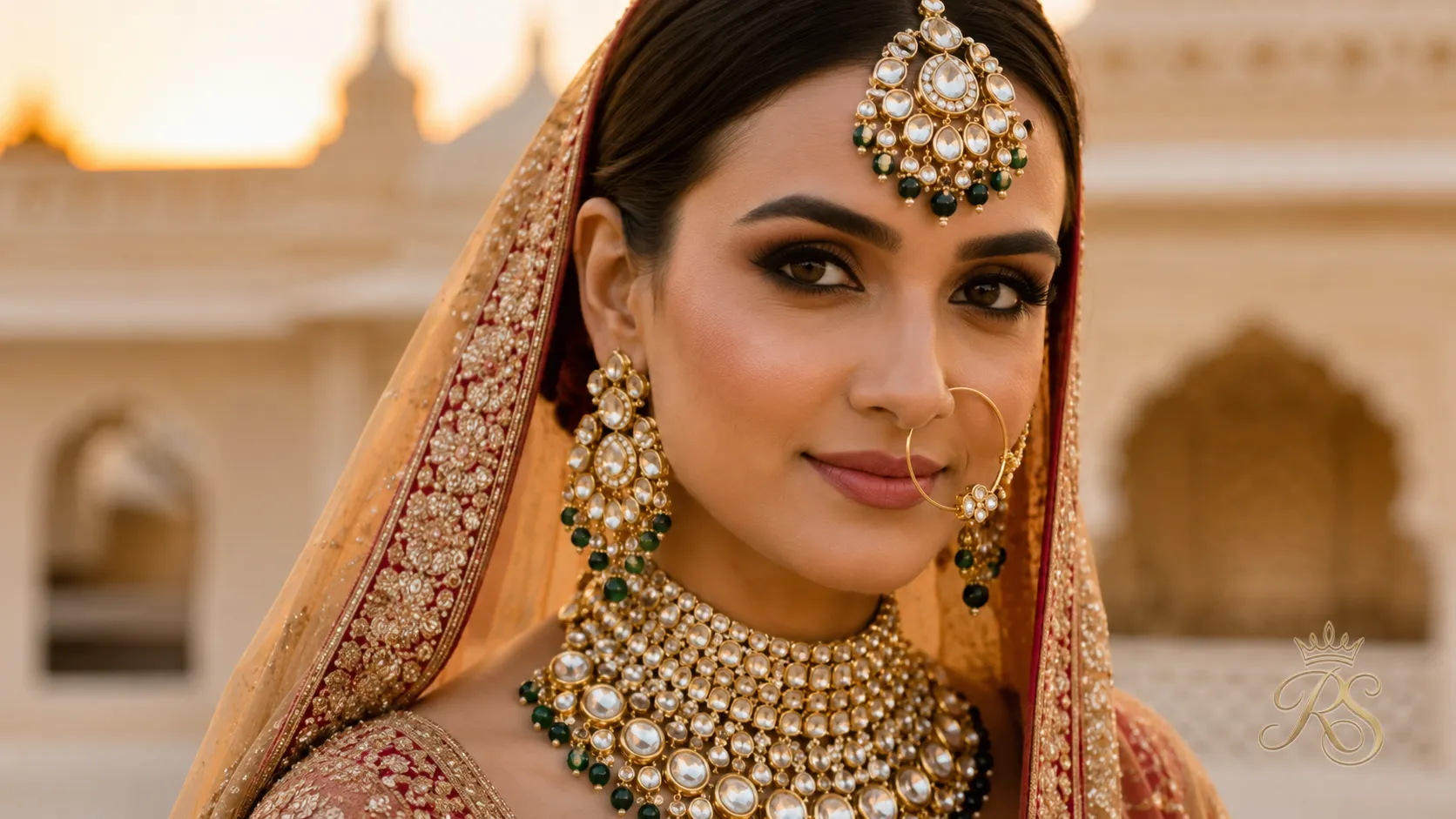
Kundan jewellery originates in the royal workshops of Jaipur and is among the most technically sophisticated forms of Indian jewellery making. The technique involves setting gemstones, traditionally uncut, into a gold base using a refined gold foil called kundan. The stones are set without claws or prongs, held in place instead by the precision of the setting itself. The result is an unusually clean, uninterrupted surface that gives kundan pieces their distinctive luminous quality.
Kundan pieces are typically reversible, with meenakari enamel work on the back of each piece that is as intricate as the stone-setting on the front. This double-sided craftsmanship is one of the hallmarks of authentic kundan work and distinguishes it from cheaper imitations. For brides choosing a kundan set, the quality of the meenakari on the reverse is as reliable an indicator of overall craftsmanship as the stone-setting on the front.
Polki: Uncut Diamonds in Their Natural State
Polki jewellery uses uncut diamonds, known as polki or satlada diamonds, that retain their natural, irregular facets rather than being cut to the precise geometries of modern brilliant cuts. This gives polki pieces a distinctive raw, organic quality that is quite different from the high sparkle of faceted diamond jewellery.
Polki became associated with Mughal-era royalty and has retained those connotations of heritage and status. It is particularly popular in North Indian bridal settings, where heavy polki sets are considered among the most prestigious choices a bride’s family can make. Contemporary polki designs often combine the uncut diamonds with kundan setting techniques and meenakari reverses, creating pieces that bring together multiple strands of Indian jewellery heritage.
Temple Jewellery: The South Indian Tradition
Temple jewellery originates in South India, particularly in Tamil Nadu, where it was originally made for temple deities before becoming part of classical dance and, later, bridal and festive jewellery. The defining aesthetic is figural: deities, mythological scenes, and sacred motifs rendered in detailed gold relief work, often with stones added for colour.
The craftsmanship in temple jewellery is extraordinary, with each piece involving hours of hand work by skilled artisans. The weight and warmth of the gold, combined with the density of the figural detail, gives temple jewellery a presence that is entirely its own. South Indian brides typically choose temple jewellery for the core of their bridal set, though it has found admirers across all Indian communities.
For brides looking to incorporate temple jewellery elements into their set, the right starting point is usually the necklace, as the most elaborate pieces in the tradition tend to be necklaces and haar designs. Pairing a temple jewellery necklace with simpler traditional gold necklace sets for smaller occasions gives good flexibility across the wedding events.
Meenakari: The Art of Enamel on Gold
Meenakari is the craft of applying coloured enamel to the surface of gold or silver, creating intricate patterns of colour within a metal framework. The tradition comes from Persia and was brought to India by Mughal craftsmen, finding its most fertile ground in Jaipur and Varanasi.
Meenakari pieces are vivid and joyful in a way that plain gold or diamond jewellery rarely is. The colours, typically red, blue, green, and white, are applied in multiple firings and have a depth and richness that enamelling on base metals cannot replicate. For brides who want colour in their jewellery beyond gemstones, meenakari offers a compelling alternative with deep cultural roots.
Jhumkas and Chandbalis: The Earring Traditions That Endure
No survey of traditional Indian bridal jewellery is complete without acknowledging the enduring appeal of the jhumka and the chandbali. These earring forms appear across virtually all regional Indian bridal traditions, in different proportions and with different decorative treatments, but consistently and persistently.
The jhumka, with its bell-shaped lower element, appears in everything from simple everyday versions to elaborate pieces incorporating pearls, rubies, and diamonds. The chandbali, a crescent-shaped earring with a pendant drop, has a more architectural quality that suits formal bridal photographs particularly well.
For brides building their earring selection, the gold earrings in traditional styles available across established jewellers in India span this entire range, from modest everyday jhumkas to occasion pieces in full kundan and polki treatment.
Why These Traditions Persist
The persistence of traditional jewellery styles in Indian bridal fashion is not simply about conservatism. These traditions persist because they carry a kind of meaning that contemporary fashion cannot manufacture. When a bride wears a kundan set that uses techniques unchanged from the Mughal courts, or a temple jewellery necklace that connects her to a craft tradition practiced continuously for hundreds of years, she is wearing something that belongs to a larger story than her own.
That sense of connection is part of what makes jewellery from jewellers with deep cultural roots in these traditions particularly valued. The craft knowledge required to authenticate, source, and present these pieces accurately is not trivial, and working with an established jeweller such as Waman Hari Pethe Sons ensures that the traditional pieces you invest in are genuinely representative of the traditions they claim to continue.